She treated Nigeria’s first Ebola patient. Days later, she was fighting for her own life — here’s how she survived
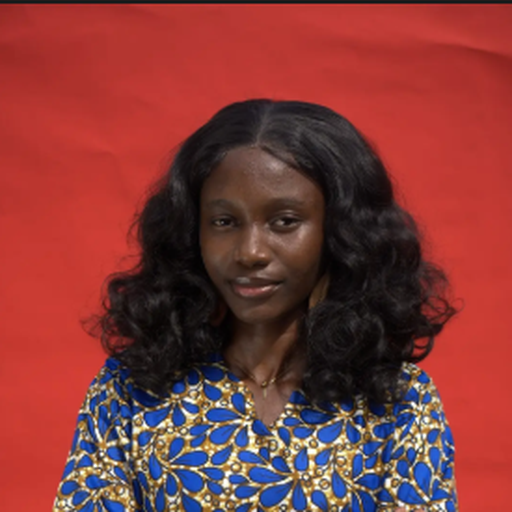

Dr Ada Igonoh contracted Ebola after treating Patrick Sawyer, whose infection became Nigeria’s first confirmed case in 2014.
She endured severe vomiting, diarrhoea and fever while receiving care in an isolation ward.
After 14 days in isolation, she tested negative for Ebola and was able to return to her family.
Dr Ada Igonoh was at her parents’ place for a retreat when she started to experience symptoms that could easily be attributed to stress or even malaria. She decided to take malaria tablets and antibiotics for the sore throat.
But deep down, she couldn’t contain her anxiety, as she knew she had been exposed to Patrick Sawyer, the Liberian-American whose infection became Nigeria’s first confirmed Ebola case in 2014.
When the fever worsened and would not be reduced by taking paracetamol, she decided to call the helpline, and an ambulance was sent with WHO doctors who came and took a sample of her blood.
It was also from her parents' house that she was carted to Yaba in an ambulance after her first blood sample had been taken for testing. Before the ambulance wheeled her away, she looked up and saw her mother watching through her bedroom window.
On getting to Yaba, a place the doctor described as a hospital, the ambulance door opened, and a Caucasian gentleman approached her while keeping a little distance and said, “I have to inform you that your blood tested positive for Ebola. I am sorry.”
She had cared for Patrick Sawyer, and now, she was fighting the same virus.
In the isolation ward, Igonoh faced fever, severe vomiting, diarrhoea and the fear of watching other patients die. The virus she contracted was the Zaire strain, one of the most lethal forms of Ebola.
But as her condition worsened, she held on to a determination she would repeat to herself throughout the ordeal: “I am a survivor; I am a survivor.”
Her account of the 14 days she spent in isolation was a story of physical suffering, faith, uncertainty and the relief of being able to return home after testing negative for the virus.
The patient who brought Ebola to Nigeria

In July 2014, Patrick Sawyer arrived in Lagos from Liberia while infected with Ebola. Igonoh worked as a doctor at First Consultants Medical Centre in Obalende, where he was admitted.
At the time, his symptoms were initially thought to be consistent with malaria, a common illness in Nigeria. Ebola had not yet been confirmed, and the danger of treating him was not immediately apparent to the medical team.
Sawyer's condition deteriorated, and Igonoh later found him unresponsive in the bathroom. She examined him, found no signs of life and certified him dead. She informed her consultant, Dr Ameyo Adadevoh, who instructed that no one should enter his room.
Laboratory testing subsequently confirmed that Sawyer had Ebola, specifically the Zaire strain. Nigeria had its first confirmed case of the disease, and the hospital staff who had cared for him became concerned about their possible exposure.
The medical team was placed under surveillance, with staff instructed to monitor their temperatures and report symptoms. Igonoh initially attributed her body aches and sore throat to stress and other common illnesses. But her condition soon became more concerning.
How the doctor became a patient and survived

Igonoh eventually tested positive for Ebola and was admitted to an isolation ward. The doctor who had helped care for Nigeria's first confirmed patient was now confronting the disease herself.
In her first-person account, published by Bella Baija in September 2014, she described the physical toll of the infection. She suffered repeated vomiting and diarrhoea that left her weak and struggling to keep fluids down.
She relied heavily on oral rehydration solution (ORS) to replace the fluids her body was losing. Even drinking it became an endurance test.
It’s worth noting that throughout her account, aside from her faith, hydration seemed to play a key role in her recovery.
She recounted how Dr David "brought bottles of water and ORS, the oral fluid therapy which he dropped by my bedside. He told me that 90 percent of the treatment depended on me. He said I had to drink at least 4.5 litres of ORS daily to replace fluids lost in stooling and vomiting.”
The experience was frightening not only because of her symptoms but also because, being a doctor herself, she knew how dangerous Ebola could be. The Zaire strain had a high fatality rate, and she understood that severe illness could lead to dehydration, shock and organ failure.
“I didn’t intend to die in that ward,” she wrote in her account.
She recalled how her pastor, who also happened to be a doctor, encouraged her to read about the virus and try to understand what was happening inside her body. The knowledge did not remove the danger, but it gave her something to focus on as she tried to endure each day.
Watching colleagues and patients die

The isolation ward brought another kind of pain. Igonoh was surrounded by people fighting the same disease, and some did not survive.
Among those she lost were hospital colleagues, including a ward maid identified as Mrs Ukoh and Nurse Justina Ejelonu. Their deaths made the danger around her impossible to ignore.
Recall that she was at her parents’ place when she started to feel the symptoms of Ebola, so one can only imagine how debilitating and nerve-wracking the anxiety she felt must have been, knowing that her parents being exposed to her could make them susceptible to the deadly virus.
In her account, she expressed how relieved she was that she had not gone home straight to her husband. “I was grateful I was not with him at home when I fell ill or he would most certainly have contracted the disease. My retreat at my parents’ home turned out to be the instrumentality God used to shield and save him.”
The situation in the isolation ward became even more distressing when Dr Adadevoh, the consultant who had supervised her care of Sawyer, was transferred to the isolation ward after testing positive for Ebola. Adadevoh was in a coma and receiving oxygen and intravenous fluids.
Igonoh described Adadevoh as her boss, teacher and mentor. She hoped her consultant would recover, but Adadevoh died on August 19, 2014.
‘I am a survivor’
As the days passed, Igonoh continued to draw strength from her family, friends and faith. She said prayers and messages of encouragement helped her cope with the fear and isolation.
Then, five days after her admission, the vomiting stopped. Her diarrhoea ceased the following day, and she gradually began eating again, starting with bananas before moving on to pap and other bland foods.
The improvement brought hope, but recovery was not straightforward. She developed another severe fever and worried that the Ebola infection was worsening again. After consulting her carers, she received treatment for malaria, and the fever eventually subsided.
She also worried about her mother and other relatives who had been placed under surveillance because of possible exposure. She feared that they, too, might become ill.
Throughout the ordeal, she kept returning to the words she used to encourage herself: “I am a survivor; I am a survivor.”
On August 16, 2014, after spending 14 days in isolation, Igonoh received the result she had been hoping for: her blood tested negative for Ebola.
She was cleared to leave the isolation ward and reunite with her family. Before departing, she underwent the required disinfection procedures and changed into fresh clothes. She was not allowed to take her personal belongings from the ward.
In her account, she recalled thinking that the items she had to leave behind, which included her iPad (aka her research assistant) and phone, could be replaced. Her life could not.
She was then led outside to meet her family. A red ribbon marked the barrier she had to cross, and cutting it became a symbolic moment of freedom. Her family welcomed her with relief and celebration.
Her parents and two brothers completed their 21-day surveillance period without developing a fever.
Ebola returns to Nigeria
Igonoh’s survival was one of the stories to emerge from Nigeria’s response to the 2014 Ebola outbreak. While she recovered, some of the healthcare workers who had risked their lives treating infected patients, including her mentor, Dr Ameyo Adadevoh, did not survive.
Nigeria eventually contained the outbreak through case detection, isolation, contact tracing and the monitoring of people who had been exposed. But more than a decade later, Ebola has again become a public health concern in the country.
On October 20, 2026, the World Health Organisation confirmed that Nigeria had recorded an imported case of Bundibugyo virus disease in a woman in the Federal Capital Territory who had recently travelled to Uganda.
But one would question the authenticity of such a claim, as the Foundation for Investigative Journalism (FIJ) reported that “the toll-free number of the Nigeria Centre for Disease Control and Prevention (NCDC), ‘6232’, is not taking calls hours after Nigeria recorded its first confirmed case of the Ebola virus disease in Abuja.”
The case was linked to a wider outbreak that began in the Democratic Republic of the Congo in May 2026. The current outbreak involves the Bundibugyo virus, not the Zaire strain that infected Igonoh in 2014. Although both cause Ebola disease, they are distinct species.
For Igonoh, the memory of 2014 is more than a record of surviving a deadly infection. She lived through severe illness while watching colleagues die, including Adadevoh, the consultant she admired.
As Nigeria responds to the newly confirmed case in 2026, her experience offers a historical reminder of the importance of early detection, effective isolation, contact tracing and protecting healthcare workers.


